7 Best Alpine Touring Ski Bindings for Backcountry Skiing (2026)
Compare 7 alpine touring ski bindings for backcountry skiing, covering weight, DIN range, step-in ease and touring modes, so you can pick the right pair.
 By Lauren Holland
Updated November 21, 2026
 By Lauren Holland
Updated November 2026
Choosing alpine touring ski bindings comes down to four things: how much weight you want to carry, how well the binding releases in a fall, how easily it switches between touring and downhill modes, and whether it works with your boots. The picks below are based on manufacturer specifications, product listings and common owner feedback patterns.
Our top picks at a glance
- 1TOP CHOICEBest overallMarker F12 Tour EPF Ski Bindings 2023 – Black/Anthracite Large 110mmView on Amazon
- 2
 TOP CHOICEBest for lightweight touringDynafit TLT Speed Turn 2.0 Binding Black/Silver, One SizeView on Amazon
- 3
 TOP CHOICEBest for aggressive freerideTyrolia Attack 14 GripWalk Alpine Ski Bindings (Solid Black, 110mm)View on Amazon
- 4
 Best for multi-day toursAtomic Shift2 13 MN Alpine Touring Binding – 2027 Black/Green/Bronze SH100View on Amazon
- 5
 Best budget-minded optionShift2 13 MN Alpine Touring Binding – 2025, Black/Green/Bronze, SH110View on Amazon
- 6
 Best adapter for tech-toe bootsTEKDAPTERS Ski Touring Adapters by DAYMAKERS, 255-345mm Length, UniverView on Amazon
- 7
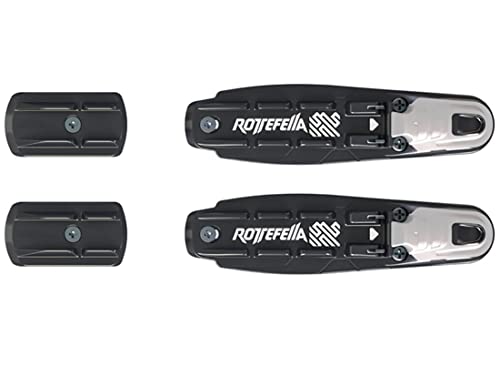 Best for nordic-style touringROTTEFELLA Whitewoods NNN Auto Touring Basic Cross Country Black Ski BView on Amazon
Our Top Picks
Quick Comparison
| Product | Best for | Key feature |
|---|---|---|
| Marker F12 Tour EPF Ski Bindings 2023 | All-round touring | EPF heel, wide DIN range |
| Dynafit TLT Speed Turn 2.0 Binding | Lightweight touring | Fast mode switching |
| Tyrolia Attack 14 GripWalk Alpine Ski Bindings | Aggressive freeride | 4–14 DIN range |
| Atomic Shift2 13 MN Alpine Touring Binding (SH100) | Multi-day tours | Multi-norm boot compatibility |
| Shift2 13 MN Alpine Touring Binding (SH110) | Budget-minded touring | Same platform, sized differently |
| TEKDAPTERS Ski Touring Adapters | Tech-toe boot users | 255–345mm adjustable length |
| ROTTEFELLA Whitewoods NNN Auto Touring Basic | Nordic-style touring | NNN auto-mount system |
Marker F12 Tour EPF Ski Bindings 2023 – Black/Anthracite Large 110mm
Marker F12 Tour EPF Ski Bindings 2023 – Black/Anthracite Large 110mm | Why We Like The Marker Tour F12 EPF Alpine Touring Binding
Best for: All-round alpine touring with a balance of descent and climb.
This is a solid choice for skiers who spend most of their time touring and want reliable downhill performance without a heavy frame. Owners often report confident release behavior and a smooth step-in.
Pros
- Wide DIN range suited to varied terrain
- Well-regarded EPF heel for consistent engagement
Cons
- Heavier than dedicated lightweight bindings
Dynafit TLT Speed Turn 2.0 Binding Black/Silver, One Size
Dynafit TLT Speed Turn 2.0 Binding Black/Silver, One Size | Why We Like The Dynafit TLT Speed Turn 2.0 Binding
Best for: Lightweight touring where weight savings matter most.
Aimed at ski mountaineers and long-distance tourers who climb as much as they descend. Manufacturers position it as a low-weight, fast-transition option.
Pros
- Light weight for long ascents
- Quick switching between touring and ski modes
Cons
- Less forgiving for heavy, aggressive skiing
Tyrolia Attack 14 GripWalk Alpine Ski Bindings (Solid Black, 110mm)
Tyrolia Attack 14 GripWalk Alpine Ski Bindings (Solid Black, 110mm) | Attack 14 GW Binding delivers reliable power transfer and a 4–14 DIN range for aggressive freeriding
Best for: Aggressive freeride and resort-focused skiers who occasionally tour.
The manufacturer specifies a 4–14 DIN range and strong power transfer, which suits skiers who push hard on firm snow. It is a heavier option with a focus on downhill performance.
Pros
- Strong power transfer for aggressive skiing
- Wide 4–14 DIN range
Cons
- Heavier than touring-focused models
Atomic Shift2 13 MN Alpine Touring Binding – 2027 Black/Green/Bronze SH100
Atomic Shift2 13 MN Alpine Touring Binding – 2027 Black/Green/Bronze SH100 | Why We Like The Atomic Shift2 13 MN Alpine Touring Binding
Best for: Multi-day tours where you need one binding that handles many boot types.
Listed as compatible with multiple boot norms, this suits tourers who switch boots or share gear. The SH100 sizing covers a specific sole-length range, so check your boot before buying.
Pros
- Multi-norm boot compatibility
- Designed for touring-mode efficiency
Cons
- Sizing must match your boot sole length closely
Shift2 13 MN Alpine Touring Binding – 2025, Black/Green/Bronze, SH110
Shift2 13 MN Alpine Touring Binding – 2025, Black/Green/Bronze, SH110 | Why We Like The Atomic Shift2 13 MN Alpine Touring Binding
Best for: Touring skiers with larger boots who want the same platform in a different size.
The SH110 variant shares the Shift2 design with a larger sizing range. It suits skiers who want a proven touring layout for bigger boots.
Pros
- Same touring platform as the SH100
- Good fit for larger boot sizes
Cons
- Model year differences mean you should confirm specs with the seller
Buying Guide
Weight and Touring Efficiency
If you plan to climb long ascents, every gram adds up over a day of skinning. Lighter bindings like the Dynafit TLT Speed Turn 2.0 are built for minimal weight, while heavier frames trade some ascent efficiency for more stability on the descent.
DIN Range and Release Performance
The DIN setting determines when the binding releases in a fall. Check that the binding’s range matches your weight, height, boot sole length and skiing ability. Aggressive skiers typically want a higher DIN range, such as the Tyrolia Attack 14, while more moderate skiers may prefer a lower, more forgiving setting.
Ease of Mode Switching
Switching between touring and downhill modes happens many times a day, often in cold conditions with gloves on. Look for bindings with large, clearly marked levers and an intuitive heel unit. The Atomic Shift2 models are designed around quick, simple transitions.
Boot Compatibility
Alpine touring bindings are built to work with specific boot standards, including Alpine, Tech and GripWalk soles. Confirm that your boots match the binding’s toe and heel interface before buying. Adapters such as the TEKDAPTERS touring adapters can help bridge some compatibility gaps, though a proper boot-binding match is always the safest choice.
Intended Use and Terrain
Think about where you will ski most. Bindings suited to multi-day traverses prioritize durability and efficient transitions, while freeride-oriented bindings focus on power transfer and retention at speed. Matching the binding to your typical terrain will make the biggest difference in how it performs for you.
FAQ
What is the difference between alpine touring and regular alpine bindings?
Alpine touring bindings allow your heel to lift for uphill climbing and lock down for downhill skiing. Regular alpine bindings keep the heel fixed, which makes them unsuitable for climbing under your own power. Touring bindings are the right choice when you plan to skin uphill.
How do I choose the right DIN setting?
DIN settings depend on your body weight, height, age, boot sole length and skiing style. Many shops use standard charts as a starting point, and a certified technician can fine-tune the setting. Setting it too high can prevent release in a fall, while setting it too low can cause unintended releases.
Are lightweight touring bindings less durable?
Lightweight bindings are engineered to balance low weight with strength, but they are generally best suited to skiers who prioritize uphill efficiency. Heavier freeride bindings often offer more robust construction for aggressive descents. Choose based on how you plan to ski, not on weight alone.
Can I use touring bindings with any ski boot?
No, compatibility depends on the boot’s sole standard and the binding’s toe and heel interface. Always verify that your boots are approved for the specific binding you are considering. Consulting the manufacturer’s compatibility list before purchase is strongly recommended.
Do I need special tools to install alpine touring bindings?
Most installations require a drill, screws, a ruler or template for positioning, and sometimes a torque driver. Many skiers have bindings mounted by a ski shop to ensure correct placement and safe release settings. Professional mounting is generally recommended for safety.
Conclusion
For most backcountry skiers looking for a balanced all-around option, the Marker F12 Tour EPF is a strong starting point. Those prioritizing light weight for long uphill days should consider the Dynafit TLT Speed Turn 2.0, while aggressive freeriders may prefer the Tyrolia Attack 14 GripWalk.
Skiers planning multi-day tours will find the Atomic Shift2 models well suited to frequent transitions, and the ROTTEFELLA Whitewoods suits those with cross-country style setups. Match your choice to your boots, terrain and skiing style for the best results.
Related reading
- Ski Touring Skis and Bindings: How to Choose a Setup That Works (2026)
- Non Release Ski Bindings: 6 Best Picks for Touring and Nordic Skiing (2026)
- Lightweight Alpine Ski Bindings: How to Choose and Set Them Up (2026)
About Lauren Holland
Lauren Holland is part of our editorial team and reviews and edits our skiing gear & technique guides, checking product details against manufacturer specifications and owner feedback.
About the author
Lauren Holland writes reviews and buying guides for Improve Your Skiing.