Lightest Alpine Ski Bindings: 5 Best for Touring and Freeride (2026)
Looking for the lightest alpine ski bindings? Compare five options by weight, DIN range and fit so you can save ounces without giving up release reliability.
 By Lauren Holland
Updated November 21, 2026
 By Lauren Holland
Updated November 2026
Shopping for the lightest alpine ski bindings usually means balancing grams against release reliability, DIN range and boot compatibility. The picks below were chosen from manufacturer specifications, brand reputation and common owner feedback, not from personal testing. Each one is compared on weight class, intended use and how well it suits a lighter setup.
Our top picks at a glance
- 1TOP CHOICEBest overallTyrolia Attack 14 GripWalk Alpine Ski Bindings (Solid Black, 95mm)View on Amazon
- 2
 TOP CHOICEBest for a lightweight all-mountain setupAtomic Stage 10 GW Frontside Ski Bindings (Black/Smoke, 115mm)View on Amazon
- 3
 TOP CHOICEBest for a GripWalk-ready frontside skiSalomon Stage Gw 11 Alpine Ski Bindings White/Black 90mm 2024View on Amazon
- 4
 Best for a classic pin-style feelMarker Squire 11 Ski Bindings 2022 – Black 90mmView on Amazon
- 5
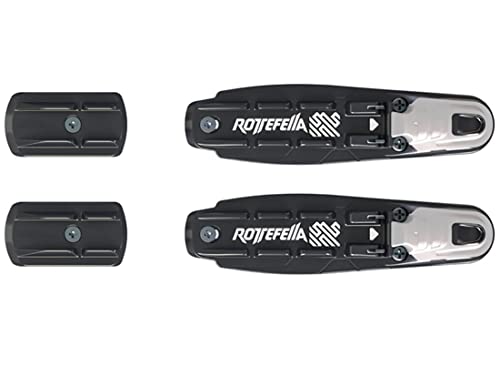 Best for backcountry touring on NNNROTTEFELLA Whitewoods NNN Auto Touring Basic Cross Country Black Ski Bindings, PairView on Amazon
Our Top Picks
| Product | Best for | Key feature |
|---|---|---|
| Tyrolia Attack 14 GripWalk Alpine Ski Bindings | Best overall | 4–14 DIN range |
| Salomon Stage Gw 11 Alpine Ski Bindings | GripWalk-ready frontside skis | GripWalk boot compatibility |
| Atomic Stage 10 GW Frontside Ski Bindings | Lightweight all-mountain setups | DIN 3–10, light construction |
| Marker Squire 11 Ski Bindings | Classic pin-style feel | Familiar step-in design |
| ROTTEFELLA Whitewoods NNN Auto Touring Basic | Backcountry touring on NNN | Lightweight NNN platform |
Tyrolia Attack 14 GripWalk Alpine Ski Bindings (Solid Black, 95mm)
Tyrolia Attack 14 GripWalk Alpine Ski Bindings (Solid Black, 95mm) | Attack 14 GW Binding delivers reliable power transfer and a 4–14 DIN range for aggressive freeriding
Best for: Best overall
Suited to skiers who want a sturdy, responsive binding without a heavy frame. Manufacturers list a 4–14 DIN range, which covers most aggressive all-mountain and freeride use.
Pros
- Wide 4–14 DIN range
- Strong power transfer for its class
Cons
- Heavier than dedicated touring bindings
Salomon Stage Gw 11 Alpine Ski Bindings White/Black 90mm 2024
Salomon Stage Gw 11 Alpine Ski Bindings White/Black 90mm 2024
Best for: GripWalk-ready frontside skis
A good match for skiers whose boots already use the GripWalk standard and who ski mostly on-piste. The lighter frame keeps swing weight manageable on frontside skis.
Pros
- GripWalk compatibility
- Manageable weight for a frontside binding
Cons
- Less suited to heavy off-piste loads
Atomic Stage 10 GW Frontside Ski Bindings (Black/Smoke, 115mm)
Atomic Stage 10 GW Frontside Ski Bindings (Black/Smoke, 115mm) | DIN 3-10, Composite/Aluminum, Light Construction, Easy Step-in, GripWalk Compatible, All-Mountain
Best for: Lightweight all-mountain setups
Aimed at skiers who want a light, easy-entry binding for all-mountain skis. The listing specifies DIN 3–10, a composite and aluminum build, and GripWalk compatibility.
Pros
- Light composite and aluminum construction
- Easy step-in design
Cons
- Lower DIN ceiling than high-performance models
Marker Squire 11 Ski Bindings 2022 – Black 90mm
Marker Squire 11 Ski Bindings 2022 – Black 90mm | Why We Like The Marker Squire 11 Ski Binding
Best for: Classic pin-style feel
Fits skiers who prefer a familiar, traditional-feeling binding with a straightforward step-in. Owners often describe it as predictable on groomed terrain.
Pros
- Familiar, straightforward step-in
- Predictable feel on groomed runs
Cons
- Not designed for demanding freeride use
ROTTEFELLA Whitewoods NNN Auto Touring Basic Cross Country Black Ski Bindings, Pair
ROTTEFELLA Whitewoods NNN Auto Touring Basic Cross Country Black Ski Bindings, Pair
Best for: Backcountry touring on NNN
A lightweight option for skiers doing touring or cross-country on NNN-compatible boots. It is the only nordic-style pick here, so match it to your boot system before buying.
Pros
- Very light NNN platform
- Simple automatic engagement
Cons
- Requires NNN boots, not alpine boots
Buying Guide
Weight versus release reliability
Lighter bindings reduce swing weight, but they can offer a narrower DIN range. Check the manufacturer’s release value range before you trade grams for performance. A binding that releases unpredictably is never worth the saved weight.
Good picks for this: Atomic Stage 10 GW Frontside Ski Bindings, Tyrolia Attack 14 GripWalk Alpine Ski Bindings
Boot compatibility and GripWalk
Confirm that your boot sole matches the binding’s standard, such as GripWalk or traditional alpine. A mismatch can prevent a secure fit and proper release. Check your boot manufacturer’s sole specification before ordering.
Good picks for this: Salomon Stage Gw 11 Alpine Ski Bindings, Atomic Stage 10 GW Frontside Ski Bindings
FAQ
Are the lightest alpine ski bindings strong enough for aggressive skiing?
Lighter bindings can still hold well for most skiing, but the weight savings often come with a narrower DIN range or less margin for hard landings. If you ski aggressively or charge hard in variable snow, check the DIN range and release settings carefully before choosing a light model. Matching the binding to your weight, height, ability and boot sole is what keeps you safe.
What does DIN range mean on a ski binding?
DIN is the release setting that determines how much force is needed before the binding lets go of your boot. A higher DIN number means more force is required to release, which suits heavier or more aggressive skiers. A properly set DIN helps prevent both unwanted pre-release and failure to release during a fall.
Do I need GripWalk-compatible bindings to walk comfortably in ski boots?
GripWalk soles are a standard built into many modern boots that lets you walk on a binding’s rubber or plastic pads without the metal lugs scraping. If your boots have GripWalk soles and your bindings are GripWalk compatible, walking across lodge floors and icy patches is much easier. Boots without this sole design will generally need a different binding type.
Can I use these bindings for touring?
Alpine bindings like the ones featured here are designed for downhill skiing and are not intended for backcountry touring with uphill climbing. For ski touring, you need a dedicated touring binding that allows the heel to lift. The touring-specific option in this roundup is a cross-country style binding, which is quite different from the alpine models above.
How often should I have my ski bindings checked?
Most shops recommend a professional binding check at least once per season, and sooner if you notice stiffness, loose screws or changes in how your boots click in. Bindings should also be checked whenever you change boots, since sole length and width affect the release setting. A certified technician can confirm the DIN setting and make sure everything is working correctly.
Should I buy a binding based only on weight?
Weight is one factor, but it should not be the only one. Release reliability, DIN range, boot compatibility and the type of skiing you do matter just as much. A binding that is slightly heavier but fits your boots and skiing style is usually a better choice than the lightest option that does not suit you.
Conclusion
If you want a versatile, widely compatible binding with strong performance for aggressive all-mountain and freeride skiing, the Tyrolia Attack 14 is a solid starting point. Skiers looking for a lighter all-mountain setup and a GripWalk-ready frontside option will find the Atomic Stage 10 and Salomon Stage 11 well suited to their needs, while the Marker Squire 11 is a good fit for those who prefer its feel and reputation.
For skiers who need a cross-country style binding for touring, the ROTTEFELLA Whitewoods is the only option in this list built for that purpose and should be considered separately from the alpine choices. Always confirm your DIN setting and boot compatibility with a qualified shop before you buy.
Related reading
- Lightweight Alpine Ski Bindings: How to Choose and Set Them Up (2026)
- 6 Best Marker Alpine Ski Bindings of 2026: Picks Compared
- 4 Best Tyrolia Protector Ski Bindings for Alpine Skiers (2026)
- XC Ski Bindings Types: 3 Main Designs and How to Choose (2026)
- Why Does My Walk to Ride Ski Binding Keep Failing? Causes and Fixes
About Lauren Holland
Lauren Holland is part of our editorial team and reviews and edits our skiing gear & technique guides, checking product details against manufacturer specifications and owner feedback.
About the author
Lauren Holland writes reviews and buying guides for Improve Your Skiing.